Essential Contractors You Need For A Full Home Renovation


The allure of the “Do It Yourself” movement is undeniable. Television shows and social media reels make home renovation look like a weekend hobby—a montage of sledgehammers, paint rollers, and high-fives. For minor cosmetic updates, like painting a bedroom or swapping out a vanity, the DIY approach is often feasible and rewarding. However, when you step into the realm of a full home renovation—a “gut job” or a major addition—the reality is starkly different.
A comprehensive renovation is a complex ecosystem of logistics, engineering, safety codes, and specialized skills. It is not merely about making things look good; it is about ensuring the structure is safe, the systems are efficient, and the investment stands the test of time. Whether you are acting as your own General Contractor (owner-builder) or hiring a firm to manage the project for you, understanding exactly who needs to be on site, and why, is the single most important factor in your project’s success.
The difference between a nightmare project that runs months over schedule and a successful build often comes down to the quality of the tradespeople involved. Attempting to use a general handyman for specialized tasks—like electrical load balancing or structural grading—is a recipe for disaster. It can lead to failed inspections, voided insurance policies, and dangerous living conditions.
This guide breaks down the essential professionals required for a major renovation. We will move chronologically through the lifespan of a typical project: starting with the ground you build on, moving to the structural envelope, installing the internal life-support systems, and finishing with the exterior transformations that add value and curb appeal. By understanding the specific roles of these experts, you can build a team that delivers a home that is as functional as it is beautiful.

Laying the Groundwork: Site Preparation and Structural Integrity
Before a single framing nail is driven or a wall is painted, you must address the land and the foundation. Many homeowners make the mistake of focusing immediately on the visible aspects of the house, ignoring the critical infrastructure that sits below eye level. If your site preparation is flawed, every subsequent dollar you spend on the house is at risk.
Solving Drainage Issues Before You Build
Water is the number one enemy of any home. Before you begin expanding a footprint or finishing a basement, you must ensure that water flows away from your foundation. If your property has a history of pooling water, swampy spots in the yard, or a damp basement, these issues must be addressed before cosmetic work begins. This is not a job for a shovel and a wheelbarrow; it requires heavy machinery and a fundamental understanding of civil engineering principles on a residential scale.
You will need to bring in a professional who understands soil composition and water tables. An excavation contractor is the first line of defense against future water damage. They do much more than simply dig holes. These specialists use laser levels and grading equipment to reshape the topography of your land, ensuring a “negative grade” where the ground slopes away from the house structure. They are also responsible for trenching utility lines—water, sewer, and electric—safely and efficiently. If you are building an addition, they clear the precise footprint required for the new foundation, managing the removal of tons of soil and rock that cannot simply be piled in the corner of the yard.
Key considerations for site prep:
- Soil Stability: Ensuring the ground is compacted enough to support new heavy structures.
- Erosion Control: Installing silt fences and barriers to prevent mudslides during the rainy season while the ground is disturbed.
- Utility Locating: Professionally identifying gas and electric lines before digging begins to prevent catastrophic accidents.
Assessing and Repairing the Foundation
Once the earth is moved, the focus shifts to the concrete slab or foundation walls. The foundation is the anchor of your entire renovation. If you are adding a second story, the existing foundation must be inspected to ensure it can bear the increased weight. If you are building outward, new footings must be poured that tie seamlessly into the old ones.
This phase is critical for longevity. Concrete work is chemically sensitive; it requires precise mixing ratios and specific weather conditions to cure properly. A concrete contractor is essential for pouring sturdy, reinforced footings and slabs that will not crack or shift under the stress of the house. Beyond just the structural footings, these professionals are often responsible for the flatwork that bridges your home to the outdoors, such as basement floors, garage slabs, and structural retaining walls.
When evaluating foundation work, look for:
- Rebar Reinforcement: Concrete has high compression strength but low tensile strength. Steel rebar is non-negotiable for longevity.
- Proper Curing Time: You cannot frame on “green” (fresh) concrete immediately. A professional will advise you on the mandatory waiting period—usually several days to weeks, depending on the mix and weather.
- Sealing and Waterproofing: Ensuring the new concrete is treated to resist moisture absorption, which can lead to spalling (flaking) during freeze-thaw cycles.
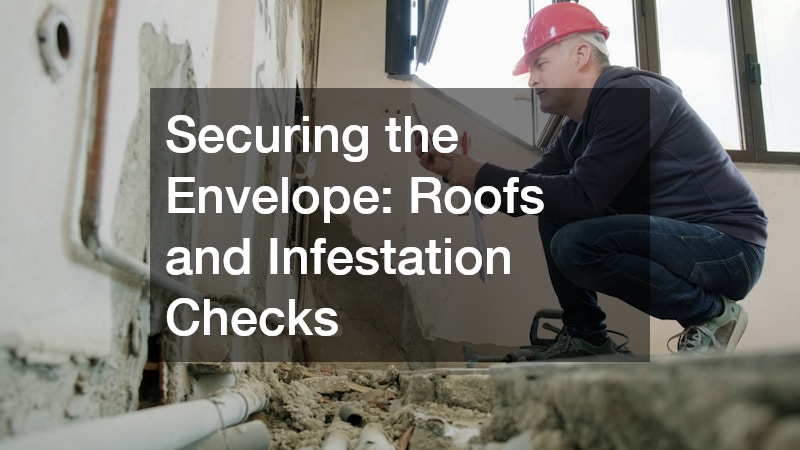
Securing the Envelope: Roofs and Infestation Checks
Once the foundation is set and the framing is up (or exposed), the priority becomes “drying in” the house. You cannot install drywall, insulation, or expensive hardwood flooring until the house is completely weather-tight and free of biological threats. This stage is about protecting the asset from nature.
Weatherproofing and Ventilation Strategies
The roof is the most critical component of the building envelope. In a full renovation, you are often faced with a choice: patch the existing roof or tear it off and start fresh. If the roof is more than 15 years old, or if you are altering the roofline for an addition, a total replacement is usually the wiser investment. A leaking roof will destroy the thousands of dollars you are about to spend on insulation and drywall.
Hiring a specialized roofing contractor ensures that the installation meets the specific needs of your climate. It is not just about nailing down shingles; it is about the entire system. This includes the underlayment (the waterproof barrier), the flashing (metal seals around chimneys and vents), and the ventilation. A roof that does not breathe properly will cook the shingles from the bottom up in the summer and cause ice dams in the winter.
Critical discussions to have regarding your roof:
- Ventilation Balance: Ensuring there is equal intake (soffit vents) and exhaust (ridge vents) to keep attic air moving.
- Material Lifespan: Asphalt shingles may last 20-25 years, while metal or slate can last 50+. Choose a material that aligns with how long you plan to own the home.
- Warranty Specifics: Many manufacturer warranties are voided if the installation is done incorrectly (e.g., using the wrong nails or nailing pattern). A certified pro ensures the warranty remains valid.
Clearing Biological Hazards Before Closing Walls
Demolition often reveals unpleasant surprises. When you tear down old drywall or open up a crawlspace, you might find evidence of unwanted guests. Termites, carpenter ants, powder post beetles, and rodents can compromise the structural integrity of the wood framing. It is absolutely vital to address these issues while the walls are open. Once you close them up with new insulation and paint, you lose the opportunity to treat the problem at the source.
Before you begin the rebuilding phase, have a pest control contractor inspect the exposed structure. They can identify the subtle signs of damage—like mud tubes from termites or “frass” (sawdust-like waste) from carpenter ants—that an untrained eye might miss. If active infestations are found, they can apply treatments directly to the wood studs and the soil foundation, creating a barrier that protects your renovation for years.
Why early detection matters:
- Structural Safety: Termites can eat through support beams, causing sagging floors and walls.
- Cost Efficiency: Treating exposed wood is significantly cheaper and more effective than drilling through finished walls later.
- Health: Rodent droppings inside walls can affect indoor air quality and trigger allergies. Removing old nests before insulating is a health necessity.

Modernizing the Core: Water, Air, and Climate Control
With the shell secure, the work moves inside to the “mechanicals.” This is the rough-in phase, where the veins and arteries of the house are installed. In older homes, the plumbing and HVAC systems are often outdated, inefficient, or dangerous. A gut renovation is the only time you can fully update these systems without tearing apart your house later.
Designing Efficient Water Systems and Layouts
Modern living demands more from plumbing systems than homes built 50 years ago. We have more bathrooms, larger appliances, and higher expectations for water pressure. If you are rearranging the layout—moving a kitchen to the other side of the house or adding an en-suite bathroom—you are engaging in complex engineering.
A licensed plumbing contractor is required not just for moving pipes, but for ensuring the system creates a safe and sanitary environment. They calculate the correct pipe sizing to ensure you don’t lose pressure when the shower and dishwasher run simultaneously. More importantly, they handle the venting of the sewer system. Without proper venting, sewer gases can become trapped in your home, creating a health hazard and a terrible smell.
Key upgrades to consider:
- PEX vs. Copper: PEX (cross-linked polyethylene) is flexible, resistant to scale buildup, and less prone to bursting in freezing temperatures than rigid copper.
- Tankless Water Heaters: This is the perfect time to switch to an on-demand system that saves space and energy.
- Shut-off Valves: A pro will install individual shut-off valves for every fixture, making future repairs easy without shutting down water to the whole house.
Optimizing Airflow and Energy Efficiency
Comfort is the ultimate luxury. If you are stripping a house to the studs, you have a golden opportunity to rectify the heating and cooling issues that plague older homes—drafty rooms, hot spots, and noisy radiators. Modern energy codes also require much stricter efficiency standards than in the past.
You need to work with HVAC contractors to perform a “Manual J” load calculation. This is a scientific calculation of exactly how much heating and cooling energy your home needs based on its size, insulation, window orientation, and local climate. Many older systems are oversized, which causes them to short-cycle (turn on and off too frequently), leading to wear and tear and high humidity levels.
Advanced climate strategies:
- Zoning: Dividing your home into different thermostat zones (e.g., upstairs vs. downstairs) so you don’t waste energy heating empty rooms.
- Ductwork sealing: Leaky ducts can lose 30% of your conditioned air into the attic or crawlspace. Sealing them during renovation saves money forever.
- Indoor Air Quality: Integrating whole-house humidifiers, dehumidifiers, or HEPA filtration systems directly into the ductwork to reduce allergens.

Exterior Transformations: Safety and Luxury
As the interior work progresses towards drywall and finishing, attention often shifts back outside. A full renovation usually involves reclaiming the yard, ensuring safety, and perhaps adding luxury amenities that transform a house into a lifestyle property.
Managing Vegetation for Safety and Sunlight
Mature trees are beautiful, but they can pose significant risks to a newly renovated home. Construction equipment requires clearance to move, and changing the grade of the soil can inadvertently kill a tree’s root system, making it unstable. Furthermore, if you are installing a new roof or siding, you do not want overhanging branches scraping against them or dumping debris into your gutters.
It is crucial to consult a tree removal contractor early in the process. They can assess the health of the trees on your lot and determine which ones are hazardous. Removing a large, rotting oak that leans toward the master bedroom is a safety imperative. Additionally, clearing trees might be necessary to open up the yard for sunlight, which is essential if you plan to install a pool or a garden.
Safety and planning factors:
- Root Intrusion: Trees planted too close to the house can send roots into your sewer lines or crack your new foundation.
- Storm Safety: Dead or dying limbs are projectiles during high winds. Proactive pruning protects your investment.
- Insurance Liability: Most homeowners’ insurance policies require you to maintain the trees on your property. Negligence can lead to denied claims if a tree falls.
Installing Water Features and Backyard Retreats
For many homeowners, the renovation isn’t complete without a backyard oasis. A swimming pool is a massive construction project in its own right, requiring its own permitting, excavation, and engineering. It is not something to be added as an afterthought; it must be integrated into the overall site plan.
Swimming pool contractors act as specialized project managers for the backyard. They must coordinate with your electricians for pump wiring and your plumbers for gas heaters. The timing is critical; you generally want the heavy digging of the pool to happen before you install final landscaping, fencing, or driveways, as the heavy equipment will tear up any delicate surfaces.
Pool planning tips:
- Material Choice: Gunite (concrete) offers unlimited design shapes but takes longer to install. Fiberglass is faster but comes in pre-set shapes. Vinyl liners are cost-effective, but the liner will eventually need replacement.
- Safety Barriers: Code requires fencing and self-latching gates around pools. This must be planned into your landscape budget.
- Utility Easements: You cannot dig a pool wherever you want; you must respect underground utility easements and property line setbacks.

The Final Approach: Curb Appeal and Access
The final stage of the heavy exterior work is usually the driveway and walkways. This is the “red carpet” for your home. It creates the first impression and provides functional access. It is wise to save this step for the very end of the project. If you pave the driveway too early, heavy dumpsters, concrete mixers, and delivery trucks will crack, stain, and ruin the new surface.
Choosing the Right Driveway Material for Your Climate
The material you choose for your driveway should depend on your climate, your budget, and the architectural style of your home. The two most common options—asphalt and pavers/stone—serve different needs and aesthetic goals.
If you have a long driveway or live in a region with severe freeze-thaw cycles (very cold winters and hot summers), an asphalt contractor can provide a durable, flexible solution. Blacktop is flexible, meaning it can expand and contract with temperature changes without cracking as easily as rigid concrete. It is also resistant to road salts used in winter. However, it requires regular seal-coating to maintain its appearance and longevity.
On the other hand, if you are looking for high-end curb appeal, you might hire a paving contractor to install interlocking pavers, cobblestones, or bricks. Pavers are individual units, which means they don’t crack in the way a solid slab does—they flex with the ground. If a paver gets stained by oil, you can flip it over or replace just that one stone. While the upfront cost is higher, the aesthetic value and ease of repair can make it a superior long-term investment.
Driveway decision matrix:
- Maintenance: Asphalt needs sealing every few years; pavers need occasional re-sanding and weed control.
- Aesthetics: Pavers offer endless patterns and colors to match the house; asphalt is purely functional black.
- Resale Value: A paver driveway is often viewed as a “luxury” upgrade that boosts appraisal value.
Conclusion
Renovating a home is akin to conducting an orchestra. Each contractor is a musician with a specific instrument; if one is out of sync, the whole performance suffers. The order of operations matters immensely. You cannot schedule the painters before the dust-generating floor sanding is done, and you certainly shouldn’t pave the driveway before the heavy machinery leaves the site.
While the cost of hiring licensed professionals for every trade can be daunting, it is the only way to ensure the safety and legality of your renovation. The “invisible” work done by the trades mentioned above—the grading, the piping, the wiring, and the structural framing—often consumes the majority of a renovation budget. This can be frustrating for homeowners who want to spend their money on visible finishes like marble countertops and custom cabinetry.
However, a marble countertop in a kitchen with low water pressure, poor heating, and a sagging floor is a poor investment. By prioritizing the core infrastructure and hiring the right experts to install it, you are building a home that is not just a showroom, but a safe, efficient, and comfortable sanctuary for decades to come. Take the time to vet your team, check their references, and listen to their advice. The success of your dream home depends on it.