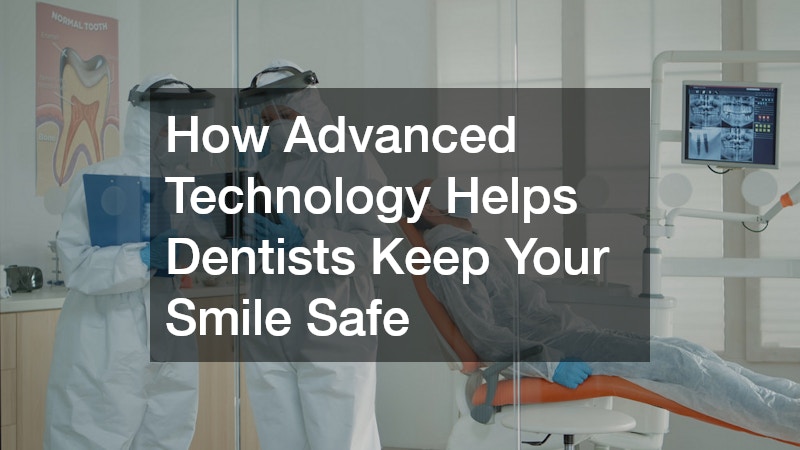
How Advanced Technology Helps Dentists Keep Your Smile Safe

For generations, a trip to the dental office was defined by a familiar set of sights and sounds: the high-pitched whir of a manual drill, the cold metallic tang of diagnostic instruments, and the dreaded, uncomfortable mouthful of goopy impression putty. While these traditional tools successfully protected oral health for decades, they often came with a side effect of patient anxiety and lengthy wait times.
Today, the landscape of oral healthcare has completely transformed. Modern dental practices have traded outdated methods for state-of-the-art digital infrastructure. By integrating cutting-edge tools like artificial intelligence, 3D printing, and high-precision lasers, modern dentists are equipped to provide care that is faster, safer, and far more accurate than ever before.
This technological revolution does more than just upgrade the equipment in the clinic; it actively shields your teeth from disease while making your time in the chair completely stress-free.
AI Diagnostics Acting as a Digital Lookout
Artificial intelligence has officially moved from tech industry boardrooms into the clinical environment. In the past, identifying a problem relied solely on a clinician’s trained eye and standard two-dimensional film X-rays. While effective, microscopic flaws or early-stage bone loss could occasionally hide in the shadows of a complex oral structure.
Now, sophisticated software programs work alongside your practitioner to analyze digital imaging in real time. These AI systems cross-reference thousands of dental data points to instantly flag microscopic structural changes, subtle signs of enamel decay, or minor shifts in bone density. When modern dentists utilize this advanced digital lookout, they can intercept oral health issues long before they cause physical pain or require invasive root canals. This incredible level of early detection ensures that your preventive treatment plan is highly proactive, keeping your natural tooth structure safely intact.
The Death of Goopy Putty and the Rise of Digital Twins
If there is one universal experience that unites dental patients in mild discomfort, it is the traditional impression tray. Biting down into a cold, messy tray of purple putty while fighting off a hyperactive gag reflex was once a mandatory rite of passage for getting a crown, bridge, or nightguard.
Thankfully, digital twin technology has rendered that messy process obsolete. Using compact, handheld intraoral scanners, practitioners can now capture thousands of high-definition images per second. Within minutes, the software renders a flawless, three-dimensional digital model of your entire mouth. This digital twin can be viewed on a chairside monitor, allowing you to see exactly what your provider sees. Furthermore, these digital files can be layered and compared year after year, giving your provider a crystal-clear map to track microscopic tooth wear, shifting alignment, or receding gum lines over time.
Same-Day Restorations via 3D Printing and Milling
In our fast-paced society, taking multiple days off from work or school to address a damaged tooth is incredibly inconvenient. The traditional process for receiving a dental crown required a patient to wear an uncomfortable, temporary acrylic shell for two to three weeks while an off-site laboratory manufactured the permanent restoration. If the lab crown didn’t fit perfectly upon arrival, the entire tedious cycle had to repeat.
Modern computer-aided design and computer-aided manufacturing (CAD/CAM) workflows have completely solved this administrative headache. Once a digital scan of your broken tooth is captured, your provider can design a custom crown right at the computer terminal. This design file is immediately sent to an in-office 3D printer or a high-precision chairside milling machine. While you relax in the waiting area, a permanent, durable, color-matched ceramic crown is sculpted on the spot. In just a single afternoon visit, you can walk out of the office with a fully restored, structurally sound smile.
Maximizing Safety and Accuracy With 3D Cone Beam Imaging
When a procedure requires navigating the deep, hidden internal structures of the jaw—such as complex root canals or dental implant placement—traditional flat X-rays simply do not provide enough spatial context. To ensure absolute safety, modern clinics rely on Cone Beam Computed Tomography (CBCT).
A CBCT scan takes a quick, non-invasive loop around your head, generating a comprehensive three-dimensional view of your oral anatomy. This imagery clearly maps out the precise locations of nerve pathways, sinus cavities, and underlying bone thickness. With this data, practitioners can virtually map out an entire surgical procedure on a screen before a single physical instrument touches your mouth. This level of guided precision eliminates guesswork, drastically reduces the risk of surgical complications, minimizes tissue trauma, and results in significantly faster healing times for the patient.
Gentle Laser Care and Minimally Invasive Treatments
The anxiety surrounding dental procedures is frequently tied to the vibration and pressure of traditional mechanical instruments. Fortunately, the widespread adoption of soft-tissue and hard-tissue lasers has revolutionized patient comfort.
Advanced dental lasers emit highly concentrated light energy to easily remove decay, reshape infected gum tissue, and eliminate deep bacterial pockets with pinpoint accuracy. Because lasers naturally cauterize blood vessels and sterilize the target area as they work, patients experience almost no bleeding, minimal post-operative swelling, and significantly less discomfort. In fact, many laser-assisted procedures can be performed completely painlessly without the need for local anesthesia injections, making the entire experience highly approachable for anxious individuals.
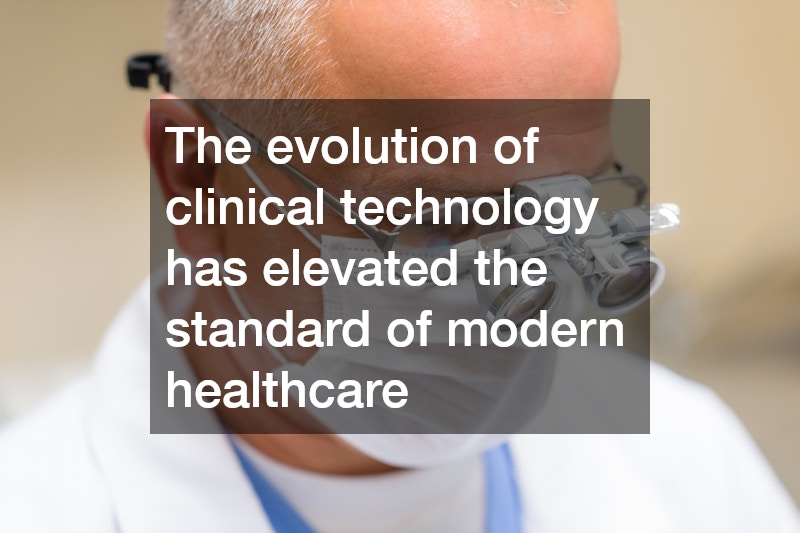
The evolution of clinical technology has elevated the standard of modern healthcare, making it safer, more transparent, and entirely centered around patient comfort. By choosing to partner with tech-forward dentists, you are ensuring that your household receives the benefits of early AI detection, highly precise digital planning, and minimally invasive treatments. Embracing these modern innovations allows you to enjoy a lifetime of brilliant oral health with the absolute peace of mind that your smile is in the safest possible hands.