How Drive In Racking Can Improve Warehouse Organization

A well-organized warehouse makes it easier for employees to locate inventory, move products, and maintain consistent workflows. When storage areas become crowded or poorly arranged, businesses may struggle with wasted space, difficult product access, and inefficient inventory management. Choosing a storage system that matches the facility’s needs can help address these challenges. Drive in racking is one option designed for high-density pallet storage, allowing businesses to make strategic use of available warehouse space. When properly planned and managed, this type of storage system can contribute to a more orderly and efficient facility.
Make Better Use of Available Floor Space
Warehouse floor space can become increasingly valuable as inventory levels grow. Traditional storage arrangements may require multiple aisles between individual rows of racks, leaving significant areas dedicated to employee and equipment access. A high-density system can reduce some of the space required for aisles while creating additional room for pallet storage.
By allowing forklifts to enter the storage structure, this system can support multiple pallets stored in depth. Instead of accessing every pallet from a separate aisle, businesses can organize products into dedicated storage lanes.
This arrangement can be particularly useful for facilities where maximizing storage capacity is a priority. However, businesses should evaluate their inventory characteristics and equipment requirements before deciding whether this configuration is appropriate.
Improve Inventory Grouping
Inventory organization is easier when similar products are stored together. Grouping products can help employees quickly identify where inventory should be placed and where it can be retrieved.
A warehouse could organize storage lanes by product family, customer order, batch, or other operational criteria. The ideal system depends on the business’s inventory management practices.
Grouping can also help reduce unnecessary travel through the facility. If related products are stored in nearby areas, employees may spend less time moving between distant storage locations when completing certain tasks.
Businesses should periodically review these groupings. Inventory needs can change as product lines expand, seasonal demand fluctuates, or certain items become more popular. A storage arrangement that worked several years ago may not remain efficient as operations evolve.
Establish Consistent Storage Procedures
A storage system is only as organized as the processes surrounding it. Employees need clear procedures for receiving, storing, retrieving, and replenishing inventory.
For example, warehouse managers can establish guidelines for assigning pallets to specific lanes. Procedures can explain how employees should handle incoming inventory, how storage locations should be recorded, and how products should be retrieved.
Consistency can make a significant difference. When employees follow the same process, inventory is less likely to end up in unexpected locations.
Training should also cover forklift operation and safe movement within storage areas. Employees need to understand how the storage system is designed to function and which procedures apply to their daily responsibilities.
Support High-Density Inventory Storage
Some warehouses need to store large quantities of the same or similar products. In these situations, maximizing storage density can help businesses keep inventory organized without requiring a larger facility.
Drive in racking can accommodate multiple pallets within a storage lane, making it possible to store substantial quantities in a relatively compact area. This design can be beneficial for products that are stored in large quantities and do not require frequent individual pallet access.
Businesses should consider inventory turnover when determining whether this approach makes sense. High-density storage may be more suitable for inventory that can be organized into groups rather than products that require frequent access to individual pallets.
Reduce Unnecessary Warehouse Clutter
Clutter can make a warehouse harder to navigate and increase the likelihood of misplaced inventory. Pallets left in temporary locations, inconsistent storage practices, and overcrowded aisles can interfere with daily operations.
A clearly planned storage layout gives inventory a designated location. When employees know where products belong, there is less incentive to leave pallets in convenient but unintended areas.
Keeping aisles and work areas clear is also important. Storage equipment should be arranged so that forklifts and employees have appropriate pathways for completing their tasks. Regular inspections can help identify areas where inventory or equipment is beginning to interfere with normal operations.
Review the Layout Regularly
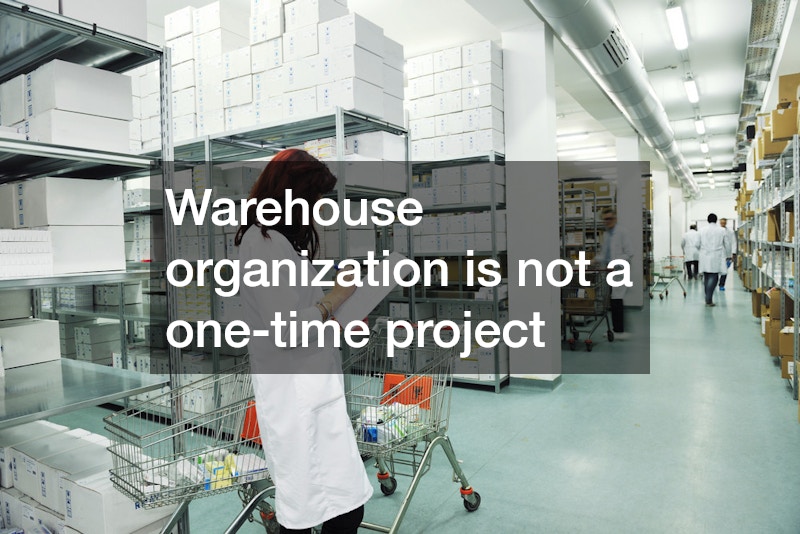
Warehouse organization is not a one-time project. Businesses should periodically review storage layouts to determine whether they continue to meet operational needs.
Inventory volume, product dimensions, order patterns, and employee workflows can all change. A regular review can identify underused areas, overcrowded lanes, or storage arrangements that no longer make sense.
Managers can also gather feedback from employees who work with the storage system every day. They may notice recurring problems that are not immediately apparent during a management-level review.
Making small adjustments as needs change can help maintain an organized facility over the long term.
Effective warehouse organization requires more than simply adding storage equipment. Businesses need a thoughtful layout, consistent procedures, accurate inventory tracking, and storage solutions that match their products and workflows. Drive in racking can support these goals by providing high-density pallet storage, dedicated storage lanes, and opportunities to make better use of available warehouse space. When combined with clear labeling, employee training, inventory controls, and regular layout reviews, the system can contribute to a warehouse that is easier to navigate and manage. The key is to select and organize storage based on the facility’s specific operational requirements.