Why Material Costs Can Quietly Sink a Construction Startup

When a storm rolls through, the difference between a home that survives unscathed and one that suffers major damage often comes down to what it’s built with. Today’s building materials are designed with wind, water, and impact resistance in mind, using engineering advances that didn’t exist even twenty years ago. If you’re building a new home, renovating, or just trying to understand why your roof or siding choice matters, knowing how these materials work can help you make smarter, safer decisions.
This article breaks down the key components that help structures stand up to severe weather.
Impact-Resistant Windows and Doors
Windows and doors are often the weakest points in a home during a storm, since a single broken pane can let wind and water rush inside and cause pressure that damages the roof and walls. Manufacturers now build impact-resistant windows using laminated glass with a tough interlayer, similar to what’s used in car windshields, so the glass cracks without fully giving way. Door frames have also been reinforced with steel and multi-point locking systems that keep them sealed tight against high winds.
These upgrades are typically rated and tested against debris impact and pressure cycling to simulate real hurricane conditions. Homeowners in storm-prone regions increasingly choose these products not just for safety but because they also improve energy efficiency and reduce outside noise.
- Laminated glass holds together even when cracked, preventing storm debris from entering
- Reinforced frames resist bending or warping under high wind pressure
- Many products are tested to withstand large impact objects at high speeds
- Impact-resistant designs often qualify for insurance discounts in coastal areas
Reinforced Concrete and Masonry Walls
Concrete has long been a go-to material for storm resistance, but modern reinforcement techniques have made it even more reliable. Steel rebar grids embedded within poured concrete walls distribute stress evenly, which helps prevent cracking under the sideways force of high winds. Insulated concrete forms, which sandwich a layer of rigid foam between two concrete walls, add both strength and energy efficiency in one package.
Masonry block walls filled with grout and reinforced vertically with steel bars offer similar advantages, especially in regions prone to tornadoes or hurricanes. These wall systems are often paired with engineered foundations designed to anchor the entire structure against uplift forces, which is one of the most damaging effects of extreme wind.
Storm-Tested Roofing Systems and Metal Decking
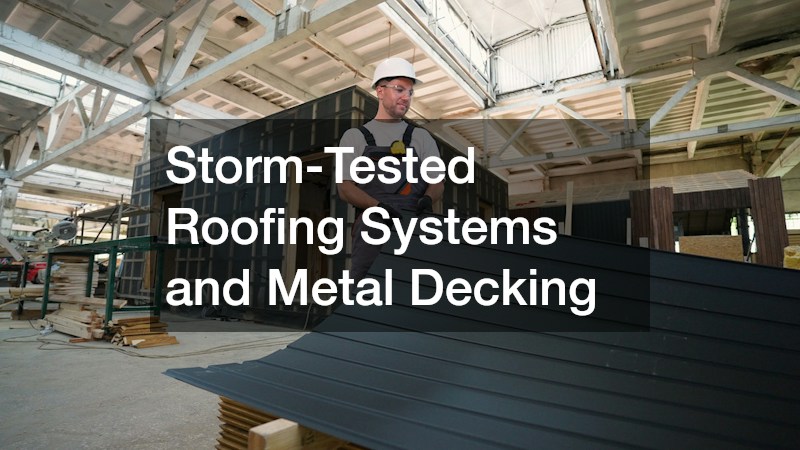
The roof takes the brunt of a storm’s force, so it’s no surprise that roofing technology has advanced considerably. Beyond shingles rated for high wind speeds, many builders now rely on roof metal decking as a structural base layer that adds rigidity and wind resistance beneath the visible roofing material. This decking is typically made from galvanized steel panels fastened in overlapping patterns that create a continuous, wind-resistant surface across the entire roof structure.
Unlike traditional plywood sheathing, metal decking resists warping from moisture and doesn’t deteriorate the same way wood can after repeated exposure to humidity. It also provides a stronger anchor point for fasteners, which matters enormously when wind uplift tries to peel roofing materials away during a storm. Builders in hurricane and tornado zones increasingly specify this decking because it holds up to both wind pressure and the freeze-thaw cycles that weaken other materials over time.
- Metal panels resist rot, warping, and pest damage better than wood sheathing
- Overlapping seams create a continuous barrier against wind-driven rain
- Stronger fastener holding power reduces the risk of roof panels lifting
- Often paired with sealed underlayment for additional water protection
Fiber Cement and Engineered Siding Materials
Siding takes a beating during storms, from flying debris to sustained wind pressure, which is why engineered materials have largely replaced older vinyl and wood options in storm-prone areas. Fiber cement siding combines cellulose fibers, sand, and cement into a dense board that resists cracking, warping, and moisture absorption far better than traditional materials. It’s also treated to resist pest damage and doesn’t become brittle in extreme cold the way some plastics do.
Engineered wood siding, which uses treated and resin-bonded wood strands, offers similar durability at a lighter weight, making it easier to install while still holding up to wind-driven rain. Both options are typically rated for specific wind speeds, so checking the manufacturer’s testing data is a smart step before choosing a product for a high-risk region.
- Fiber cement resists fire, pests, and moisture better than standard vinyl siding
- Engineered wood siding is lighter but still built for high wind exposure
- Look for products rated for specific wind speed thresholds
- Proper installation with corrosion-resistant fasteners matters as much as material choice
Advanced Foundation and Anchoring Techniques
Even the strongest walls and roof won’t help much if the foundation beneath them fails during a storm. Modern construction increasingly uses continuous load paths, a system of connectors and straps that link the roof, walls, and foundation into a single reinforced structure. This approach helps distribute wind and seismic forces throughout the building rather than concentrating stress at weak points.
Hurricane straps and tie-down anchors are now standard in many coastal building codes, connecting roof trusses directly to wall studs and foundation bolts. These small metal connectors may seem minor, but they’re often the reason a roof stays attached during extreme wind events instead of lifting off entirely.
- Continuous load path systems tie the entire structure together for added strength
- Hurricane straps secure roof trusses to walls and foundations
- Deep foundation anchoring helps resist uplift and lateral movement
- Code requirements for these systems vary by region, so local standards matter
Conclusion
Understanding how modern materials are engineered to handle extreme weather can make a real difference when you’re planning a build, renovation, or storm preparedness upgrade. From impact-resistant windows to reinforced roofing systems, these innovations work together to protect your home and the people inside it. As you research products and contractors, ask specific questions about wind ratings, testing standards, and installation methods rather than relying on brand names alone. Taking the time now to choose storm-ready materials can save significant stress, money, and risk down the road.